
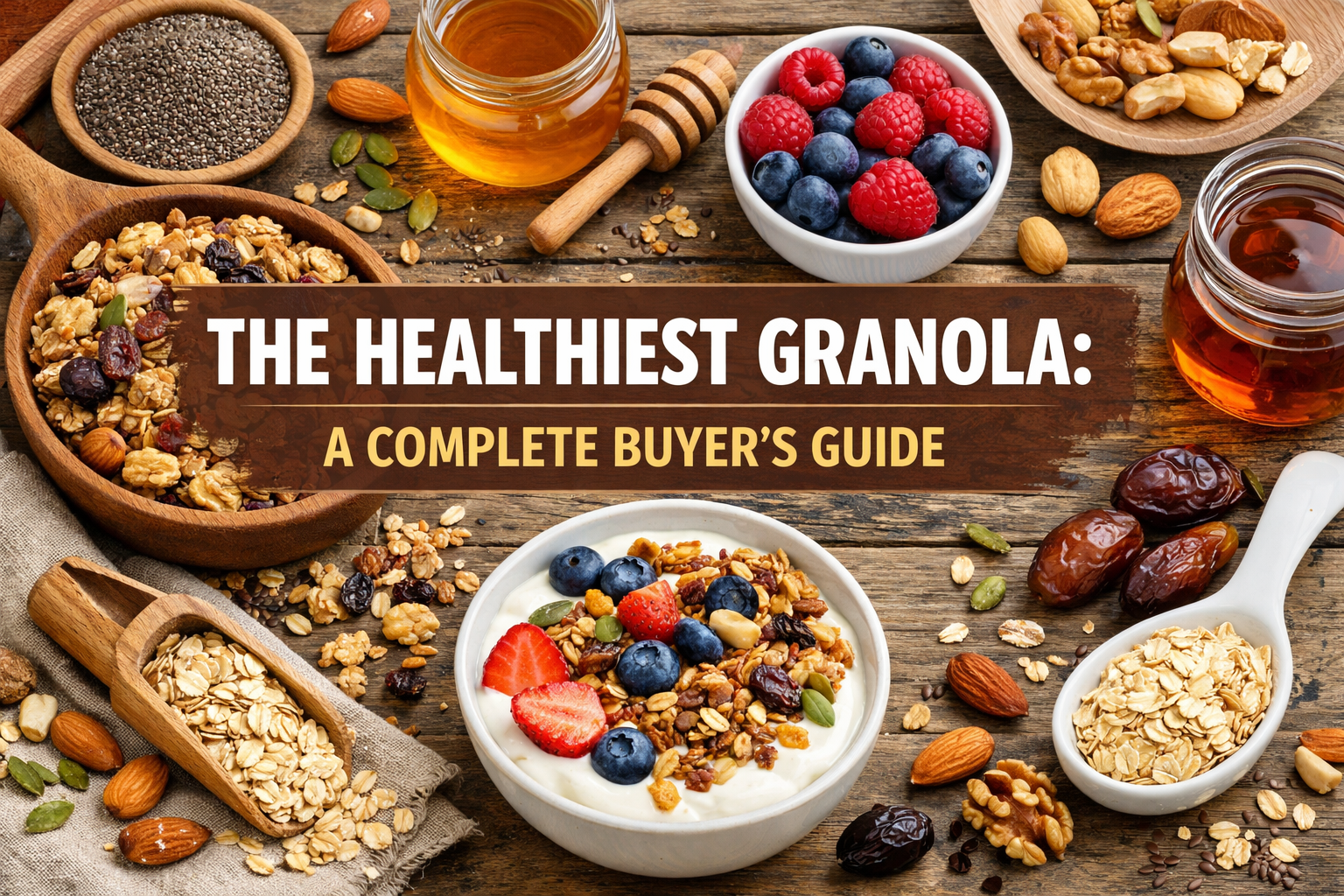
what is the healthiest granola?, Granola is often marketed as a nutritious breakfast staple, but not all granola is created equal. The healthiest granola is made with whole grains like oats, provides at least 4 grams of fiber and protein per serving, contains less than 10 grams of added sugar, and uses natural sweeteners such as honey or maple syrup. It should also have a simple ingredient list featuring nuts, seeds, and dried fruit without artificial additives or fillers.
Brands like Kodiak offer high-protein, high-fiber options, while homemade granola gives you full control over ingredients and sweetness levels. However, granola can be calorie-dense, so portion size and ingredient quality matter. Learning how to identify truly healthy granola can help you make smarter dietary choices.
Understanding Whole Grain Granola
🥣 Granola is a baked mixture typically made from rolled oats, nuts, seeds, and a natural sweetener. Whole grain granola uses minimally processed grains, preserving fiber, vitamins, and minerals that are often stripped away during refining.
It’s commonly enjoyed with milk, yogurt, plant-based alternatives, or sprinkled on smoothie bowls and fruit salads. When formulated correctly, granola can be a nutrient-rich food that provides lasting energy. However, many commercial brands add excessive sugar, unhealthy oils, and artificial flavors, turning a healthy option into a high-calorie indulgence.
what is the healthiest granola, Is So Popular
📈 Granola has gained widespread popularity among health-conscious consumers looking for convenient and satisfying meals. The demand for clean-label foods, plant-based diets, and whole ingredients has pushed granola into the mainstream.
People appreciate granola’s balance of complex carbohydrates, healthy fats, and protein, which can help maintain energy levels throughout the day. Its versatility also makes it appealing—it works in breakfast bowls, trail mixes, snacks, and even savory recipes. Many brands now offer gluten-free, vegan, and high-protein varieties to suit different dietary preferences.
Different Ways to Choose Granola
When selecting healthy granola, consumers generally choose one of three approaches:
1. Store-Bought Granola
Store-bought granola is convenient and widely available, but nutritional quality varies significantly. Some brands focus on high protein and clean ingredients, while others rely on refined sugars and fillers.
2. Organic or Specialty Granola
Organic and specialty brands often use non-GMO ingredients and avoid synthetic additives. While these products can be healthier, they often cost more and may still contain significant sugar, so label reading is essential.
3. Homemade Granola
Homemade granola offers the greatest control. You can adjust sweetness, choose healthier oils, and add superfoods like chia seeds, cacao nibs, or hemp seeds. The main drawback is the time and effort required to prepare it consistently.
Key Factors to Evaluate When Buying Granola
🔍 To determine whether a granola is truly healthy, consider the following:
-
Simple Ingredients: Look for short, recognizable ingredient lists dominated by oats, nuts, seeds, and natural sweeteners.
-
Fiber Content: Aim for at least 4 grams of fiber per serving to support digestion and satiety.
-
Protein Level: Choose granolas with 4 grams or more protein per serving. Some brands provide up to 17 grams through added nut or legume proteins.
-
Sugar Content: Keep added sugar below 10 grams per serving. Prefer sweeteners like dates, maple syrup, or honey over cane sugar or corn syrup.
-
Healthy Fats: Nuts and seeds provide beneficial fats, but saturated fat should stay below 6 grams per serving.
-
Serving Size: Be mindful of portions—granola is calorie-dense, and small serving sizes can be misleading.
Pros and Cons of Granola
Benefits
-
High in fiber and plant-based protein
-
Provides sustained energy
-
Versatile and easy to incorporate into meals
-
Can be customized for allergies and dietary needs
Drawbacks
-
Calorie-dense and easy to overeat
-
Many commercial brands contain hidden sugars
-
Some use inflammatory oils like palm or refined canola oil
-
Preservative-free versions may have shorter shelf lives
How to Pick the Healthiest Granola
📋 Use this step-by-step checklist when shopping:
-
Check the Nutrition Label: Look for ≥4g fiber, ≥4g protein, and <10g added sugar per serving.
-
Review Ingredients: Whole grain oats should be the first ingredient. Avoid long, chemical-heavy lists.
-
Choose Natural Sweeteners: Prefer honey, maple syrup, or dates over refined syrups.
-
Assess the Fat Source: Nuts and seeds are ideal; avoid hydrogenated or palm oils when possible.
-
Match Your Diet: Look for certified gluten-free or no-added-sugar options if needed.
-
Ignore Marketing Claims: Words like “natural” or “whole grain” are not guarantees—verify with the label.
Cost Comparison: Store-Bought vs. Homemade
Premium granola typically costs between $7 and $12 per 10–12 oz bag, especially for organic or specialty brands. Homemade granola is significantly cheaper, often costing $0.50 to $0.75 per ounce when ingredients are purchased in bulk.
While store-bought granola offers convenience, homemade versions provide better value, ingredient transparency, and customization.
Top Granola Brands Compared
| Brand | Strengths | Drawbacks | Price Level |
|---|---|---|---|
| Kodiak | High protein (16–17g), good fiber, clean sweeteners | Higher cost, limited flavors | $$$ |
| Seven Sundays | Low sugar, eco-friendly, date-sweetened | Chewier texture, expensive | $$$ |
| Back Roads | Very low added sugar, whole ingredients | Lower protein, limited availability | $$ |
| Purely Elizabeth | Whole grains, ancient grains, moderate sugar | Some flavors include chocolate | $$ |
| Lovebird / Grandy Organics | Organic, gluten-free, clean oils | Lower protein, premium pricing | $$$ |
What Customers Are Saying
Consumer reviews highlight several recurring points:
-
Positive Feedback: Many users love the crunch, balanced sweetness, and long-lasting fullness of brands like Kodiak and Tom’s Perfect 10.
-
Common Complaints: People often misjudge serving sizes and consume more calories than expected. Some find healthy granolas too dry or bland. Others mention occasional freshness or quality inconsistencies.
Storage, Safety, and Labeling Tips
Store granola in an airtight container in a cool, dry place to maintain freshness. Homemade granola typically lasts 2–3 months, while commercial products last longer due to preservatives.
Always check allergen labels for nuts, soy, dairy, or gluten. Organic claims must be certified, but terms like “natural” are not regulated and do not guarantee nutritional quality.
Final Thoughts
The healthiest granola depends on your nutrition goals and ingredient preferences. If you want high protein and fiber, Kodiak is a strong choice. If low sugar and minimal processing matter most, Back Roads or homemade granola may be better options. For organic and sustainably sourced ingredients, Lovebird and Grandy Organics stand out.
Ultimately, the healthiest granola is the one that fits your diet, contains simple ingredients, and is eaten in appropriate portions.
Frequently Asked Questions
What should I look for in healthy granola?
Choose whole grain oats as the first ingredient, at least 4 grams of fiber and protein per serving, less than 10 grams of added sugar, and simple ingredients like nuts and seeds.
Is granola good for weight loss?
Granola can support weight management when eaten in controlled portions and paired with protein-rich foods like Greek yogurt.
Can I eat granola every day?
Yes, as long as it’s low in sugar and you stick to recommended serving sizes.
Why is homemade granola healthier?
Homemade granola allows you to control sugar, oil, and ingredient quality, making it cleaner and more personalized.
Does granola always have to be crunchy?
No. Some granolas are chewy or cluster-based depending on the recipe, but texture doesn’t affect nutritional value.