
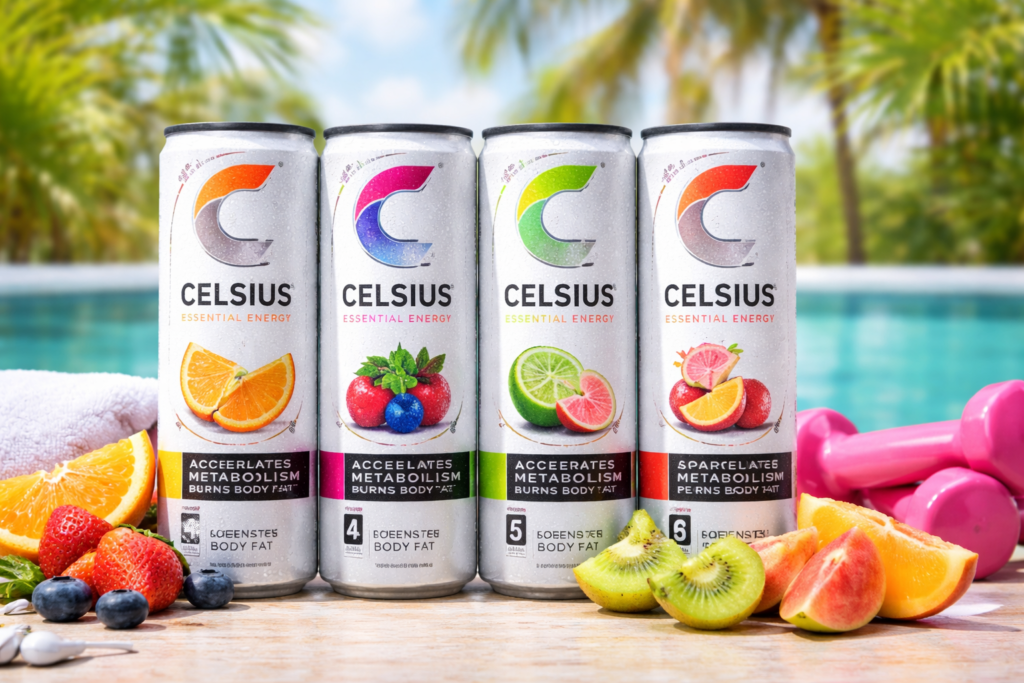
The Celsius drink has become a popular choice for people who want more energy before a workout, study session, or busy workday. Its colourful cans, zero-sugar label, and fitness-based marketing make it seem healthier than many traditional energy drinks.
However, Celsius is still a highly caffeinated energy drink. A standard can contains 200 milligrams of caffeine, while a Celsius Essentials can contains 270 milligrams. That is a large amount for one drink, especially for people who are sensitive to caffeine.
Celsius may improve alertness and support exercise performance in some adults. However, it cannot replace sleep, water, healthy food, or regular exercise. It is also not a proven weight-loss solution.
This guide explains the ingredients in Celsius, possible benefits, side effects, caffeine limits, and safer ways to use the drink.
What Is a Celsius Drink?
Celsius is a brand of energy drinks and drink powders. Most Celsius energy products are marketed to active adults seeking more energy and focus.
The current Celsius product range includes:
- Original Celsius energy drinks
- Celsius Vibe drinks
- Celsius Essentials
- Celsius On-The-Go powder packets
- Celsius Hydration powders
These products do not all contain the same amount of caffeine. According to the company:
| Celsius product | Caffeine per serving |
|---|---|
| Celsius and Celsius Vibe | 200 mg |
| Celsius Essentials | 270 mg |
| Celsius On-The-Go powder | 200 mg |
| Celsius Hydration powder | 0 mg |
Celsius Hydration is different from the energy drink range because it does not contain caffeine. Always read the exact label because formulas, serving sizes, and ingredients can vary.
Is Celsius an Energy Drink?
Yes. Standard Celsius products are energy drinks because they contain a high amount of caffeine.
Caffeine is a stimulant. It affects the brain and nervous system, which can make you feel more awake and alert.
The word “energy” can sometimes be confusing. Celsius does not provide your body with the same lasting energy that comes from food, sleep, and rest. Most of the quick feeling of energy comes from caffeine.
B vitamins help the body turn food into usable energy, but they do not work like caffeine. Taking extra B vitamins does not replace sleep or create instant physical energy.
Main Ingredients in Celsius Drinks
Ingredients can differ between flavours and product lines. Check the can or packet before drinking it, especially if you have allergies, dietary needs, or health concerns.
Caffeine
A standard Celsius can contains 200 mg of caffeine. Celsius Essentials contains 270 mg.
Caffeine can improve alertness and reduce feelings of tiredness. It may also support exercise performance in some people.
However, too much caffeine can cause:
- Shaking
- Anxiety
- Headaches
- Trouble sleeping
- Fast heartbeat
- Upset stomach
- Higher blood pressure
- Restlessness
The FDA says that up to 400 mg of caffeine per day is generally not associated with harmful effects in most healthy adults. This is a general limit, not a recommended target. Some people may experience side effects at much lower amounts.
Green Tea Extract
Many Celsius drinks contain green tea extract. Green tea naturally contains caffeine and plant compounds, including catechins.
The company promotes green tea extract as part of its metabolism blend. However, the presence of green tea does not turn the drink into a weight-loss treatment.
Green tea extract and caffeine may cause a small rise in energy use for a limited period. Research has not shown that caffeine alone creates large or lasting weight loss.
Guarana Seed Extract
Guarana is a plant that naturally contains caffeine. It is included in many energy drinks and supplements.
The caffeine from guarana still counts toward your total caffeine intake. A drink does not become safer simply because its caffeine comes from a plant.
The FDA explains that the body handles naturally occurring caffeine and added caffeine in the same way. The source does not remove the usual caffeine risks.
Taurine
Taurine is a substance naturally found in the human body and in some foods. It is also included in many energy drink formulas.
Taurine participates in several bodily processes, including nerve and muscle function. However, it should not be viewed as a magic ingredient for energy, muscle growth, or fat loss.
The effect of a full energy drink cannot be judged by looking at taurine alone. The amount of caffeine and the person’s health, body size, and caffeine tolerance also matter.
Ginger Root Extract
Celsius includes ginger root in several formulas.
Ginger is widely used in foods and drinks. It may help with nausea and digestion in some situations, but the amount found in an energy drink may not be the same as the amount used in medical studies.
The presence of ginger does not cancel the effects of caffeine.
B Vitamins
Celsius drinks may contain vitamins such as:
- Niacin, or vitamin B3
- Pantothenic acid, or vitamin B5
- Vitamin B6
- Biotin
- Vitamin B12
B vitamins help the body process nutrients and support normal cell function. They are important for health, but more is not always better.
The alert feeling after drinking Celsius mainly comes from caffeine, not from the vitamins.
Vitamin C
Some Celsius products contain vitamin C. This vitamin supports normal immune function and tissue repair.
However, an energy drink should not be your main source of vitamin C. Fruits and vegetables provide vitamin C together with fibre and other useful nutrients.
Sweeteners
Celsius energy drinks are generally sold as zero-sugar drinks. Some products use sweeteners such as sucralose instead of regular sugar.
Sucralose is regulated by the FDA as a food additive and is approved for use under certain conditions. Current research continues to study how different sweeteners may affect appetite, digestion, and the gut.
Some people may prefer to avoid sweeteners because of taste, stomach discomfort, or personal choice. Check the label because ingredients can change between products and countries.
Possible Celsius Drink Benefits
Most of the clear short-term benefits of Celsius come from caffeine. Results vary from person to person.
It May Improve Alertness
Caffeine can make you feel more awake and may improve attention for a limited time.
This may be useful during an early workout, a long drive, a work shift, or a study session. However, caffeine does not fix the reason you are tired.
When tiredness comes from poor sleep, illness, stress, or poor nutrition, another energy drink may hide the problem for a few hours without solving it.
It May Support Exercise Performance
Caffeine is one of the most studied ingredients used for exercise performance.
Research reviewed by the National Institutes of Health suggests that about 2 to 6 mg of caffeine per kilogram of body weight may improve endurance, strength, or power in some athletes. Taking more does not appear to provide extra benefits and increases the risk of side effects.
A 200 mg Celsius drink may fall within this range for some adults. However, the right amount depends on body weight, caffeine habits, health, and the type of exercise.
Caffeine does not improve performance for everyone. Some people may instead feel shaky, anxious, sick, or distracted.
It Contains No Added Sugar
One possible advantage of many Celsius products is that they contain no sugar.
A zero-sugar drink usually has fewer calories than an energy drink containing large amounts of added sugar. It also avoids the rapid rise in blood sugar caused by a highly sweetened beverage.
However, zero sugar does not mean the drink is completely healthy or safe. The amount of caffeine is still important.
It May Help You Feel Less Tired
Caffeine can block some of the brain signals linked with tiredness. This may help you feel more active for a short period.
The effect wears off. Some people later feel tired, irritable, or unable to focus, especially after consuming a large dose or sleeping poorly.
Celsius Drink Side Effects and Risks
Many healthy adults may tolerate Celsius, but side effects are possible even with a single can.
High Caffeine Intake
One standard can provides half of the FDA’s general 400 mg daily level for most healthy adults. One Celsius Essentials can provides more than half.
You must also count caffeine from:
- Coffee
- Tea
- Soda
- Chocolate
- Pre-workout supplements
- Caffeine tablets
- Some medicines
- Other energy drinks
For example, drinking one Celsius and two cups of coffee on the same day may push your caffeine intake above 400 mg, depending on the coffee strength.
Anxiety and Shaking
Caffeine stimulates the nervous system. For some people, 200 mg at one time can cause nervousness, shaking, sweating, or a feeling of panic.
People with anxiety may notice stronger symptoms after an energy drink.
Stop drinking the product and speak with a healthcare professional if caffeine regularly causes severe anxiety, chest discomfort, or panic-like symptoms.
Fast Heartbeat and Palpitations
Caffeine may temporarily raise heart rate or blood pressure.
A person may feel the heart beating hard, fast, or unevenly. These feelings are known as palpitations.
Get urgent medical help for chest pain, fainting, severe shortness of breath, confusion, or a heartbeat that does not return to normal.
Sleep Problems
Caffeine can stay in the body for several hours. Drinking Celsius in the afternoon or evening may make it harder to fall asleep.
Research has found that a large dose of caffeine can disturb sleep even when taken six hours before bedtime. Individual responses differ, but people with sleep problems may need to stop caffeine much earlier in the day.
Poor sleep can then create a cycle:
- You sleep badly.
- You feel tired the next day.
- You drink more caffeine.
- The caffeine makes the next night’s sleep worse.
Caffeine Tolerance and Dependence
Using caffeine every day can lead to tolerance. This means the same amount may feel less effective over time.
Some people then drink larger amounts to get the same effect.
Suddenly stopping regular caffeine use can cause:
- Headaches
- Tiredness
- Low mood
- Poor focus
- Irritability
These symptoms are usually temporary, but they can make it difficult to reduce caffeine intake.
Stomach Problems
Energy drinks may cause:
- Nausea
- Acid reflux
- Stomach pain
- Loose stools
- Bloating
Caffeine, carbonation, acids, sweeteners, and drinking on an empty stomach may all play a part.
People with acid reflux or a sensitive stomach may find Celsius uncomfortable.
Mixing Celsius With Alcohol
Do not mix Celsius or any other energy drink with alcohol.
Caffeine may make you feel more awake, but it does not make you less drunk. You may underestimate how impaired you are and drink more alcohol than planned.
Caffeine also does not improve judgment, balance, or safe driving after alcohol use.
Combining It With Pre-Workout Products
Many pre-workout powders already contain caffeine.
Using a Celsius drink with pre-workout, coffee, or caffeine tablets can create a very high total dose. Always check every label before combining products.
Avoid “dry scooping” powders or taking more than the listed serving.
Is Celsius Good for Weight Loss?
Celsius is not a weight-loss treatment.
Caffeine may cause a small, short-term increase in calorie expenditure and fat breakdown. However, research has not clearly shown that this effect leads to meaningful long-term weight loss.
You will not lose weight simply by adding Celsius to an unhealthy routine.
Long-term weight management usually depends on:
- A balanced eating plan
- Regular movement
- Good sleep
- Manageable portions
- Stress control
- Habits you can continue
A zero-sugar energy drink may contain fewer calories than a sugary drink. Replacing a high-calorie drink with a low-calorie option could reduce calorie intake, but water, unsweetened tea, or plain coffee may offer a simpler choice.
Is Celsius Healthier Than Other Energy Drinks?
Celsius may contain less sugar and fewer calories than many sweetened energy drinks.
However, this does not automatically make it healthy. A Celsius can may contain more caffeine than some other brands.
When comparing products, check:
- Total caffeine
- Serving size
- Added sugar
- Sweeteners
- Number of servings per container
- Other stimulants
- Your total caffeine for the day
The claim that Celsius uses “natural” caffeine does not make its caffeine safer. The body responds to caffeine in the same basic way regardless of whether it comes from coffee, tea, guarana, or an added ingredient.
Who Should Avoid Celsius Drinks?
Children and Teenagers
Energy drinks are not recommended for children and teenagers because of their caffeine levels.
The FDA notes that medical experts advise children and teens to avoid energy drinks. Too much caffeine in young people may cause a fast heart rate, anxiety, high blood pressure, sleep problems, digestive problems, and dehydration.
Pregnant People
One standard Celsius contains 200 mg of caffeine. This equals the daily pregnancy limit commonly discussed by the American College of Obstetricians and Gynaecologists.
ACOG advises keeping caffeine below 200 mg per day during pregnancy. Since caffeine also comes from food, tea, coffee, and chocolate, one could use the full daily amount or push the total over it.
Pregnant people should speak with their healthcare provider before using Celsius or other energy drinks.
People Who Are Breastfeeding
Caffeine passes into breast milk.
ACOG states that moderate amounts of around 200 mg per day are unlikely to affect most babies, but newborns and premature babies may be more sensitive.
One standard Celsius already contains 200 mg. Ask a healthcare professional for personal advice.
People With Heart or Blood Pressure Conditions
People with abnormal heart rhythms, uncontrolled blood pressure, or other heart problems should ask a healthcare professional before using a high-caffeine drink.
People With Anxiety or Sleep Disorders
Caffeine can make nervousness and sleep problems worse.
A smaller dose of tea or coffee may be easier to control than a full 200 mg or 270 mg energy drink.
People Taking Certain Medicines
Caffeine may interact with some medicines and health conditions.
Ask a doctor or pharmacist about Celsius when you take regular medicine, especially medicines affecting the heart, blood pressure, sleep, anxiety, or attention.
How Many Celsius Drinks Can You Have Per Day?
The Celsius company recommends no more than two standard 12-ounce cans per day. It recommends no more than one Celsius Essentials drink in 24 hours.
However, this company limit is not a personal recommendation.
Two standard cans equal 400 mg of caffeine. That meets the FDA’s general daily level for most healthy adults before accounting for coffee, tea, chocolate, medicines, or other sources.
For many people, one can may already be too much.
A safer approach is to:
- Start with less than one full can
- Avoid other caffeine that day
- Never consume two cans close together
- Stop when side effects appear
- Avoid using it every day
- Ask a healthcare professional when you have a medical condition
How to Use Celsius More Safely
You cannot remove every risk, but these steps may reduce harm:
- Read the caffeine amount on the exact product.
- Count caffeine from every food, drink, supplement, and medicine.
- Do not combine Celsius with pre-workout powder or caffeine tablets.
- Avoid drinking it on an empty stomach.
- Drink water before and after it.
- Do not use it as your main source of fluid.
- Avoid drinking it in the late afternoon or evening.
- Never mix it with alcohol.
- Do not drink it before driving when you are badly sleep-deprived.
- Stop using it if you experience shaking, severe anxiety, chest discomfort, or a racing heartbeat.
- Choose the caffeine-free Celsius Hydration product only after checking that the label clearly states zero caffeine.
- Do not rely on Celsius for weight loss.
Frequently Asked Questions
Is Celsius healthy?
Celsius is a zero-sugar energy drink, but it is not a health drink. Its high caffeine level may improve alertness, but it may also cause sleep problems, anxiety, headaches, or a fast heartbeat.
How much caffeine is in Celsius?
Standard Celsius and Vibe cans contain 200 mg. Celsius Essentials contains 270 mg. On-The-Go packets contain 200 mg, while Celsius Hydration powder contains no caffeine.
Can I drink Celsius every day?
Some healthy adults may tolerate it, but daily use can lead to poor sleep, tolerance, and dependence. Your total caffeine intake and personal sensitivity matter more than the fact that it is sold as a daily beverage.
Does Celsius burn fat?
Caffeine may slightly raise calorie use and fat breakdown for a short time. This does not mean Celsius causes meaningful or lasting weight loss.
Can I drink Celsius before working out?
Some adults may benefit from caffeine before exercise. However, 200 mg or 270 mg may be too much for sensitive people, small in stature, or those new to caffeine, or for those who exercise late in the day.
Does Celsius cause an energy crash?
It contains no sugar, so it may not cause the same blood sugar drop as a heavily sweetened drink. However, you may still feel tired when the caffeine wears off, especially if you are sleep-deprived.
Is Celsius safe for teenagers?
Medical experts advise children and teenagers to avoid energy drinks because of their caffeine content.
Is Celsius safe during pregnancy?
One standard can contains 200 mg of caffeine, which may exceed the commonly advised daily pregnancy limit. Speak with a healthcare professional before consuming it.
Does Celsius hydrate you?
Regular Celsius energy drinks are not designed to replace water. Celsius Hydration is a separate caffeine-free powder product. Check the label carefully because the names can look similar.
Is natural caffeine safer?
No clear safety advantage comes from calling caffeine natural. The FDA states that the body handles natural and added caffeine in the same way.
Final Verdict: Is Celsius Drink Good or Bad?
The Celsius drink has some clear advantages over heavily sweetened energy drinks. Most versions have no sugar, and caffeine may improve alertness or exercise performance in some healthy adults.
However, Celsius is still a strong stimulant drink. A standard can contains 200 mg of caffeine, while Celsius Essentials contains 270 mg. That amount may cause side effects and can quickly raise your total daily intake.
It should not be described as a weight-loss product, a sleep replacement, or a drink that everyone can safely use every day.
Healthy adults who tolerate caffeine may choose to drink Celsius occasionally. The safest approach is to check the label, count all caffeine sources, avoid mixing stimulants, and stop using it when unwanted symptoms occur.
For lasting energy, focus first on enough sleep, regular meals, water, movement, and stress management. These habits support your body more reliably than any energy drink.