
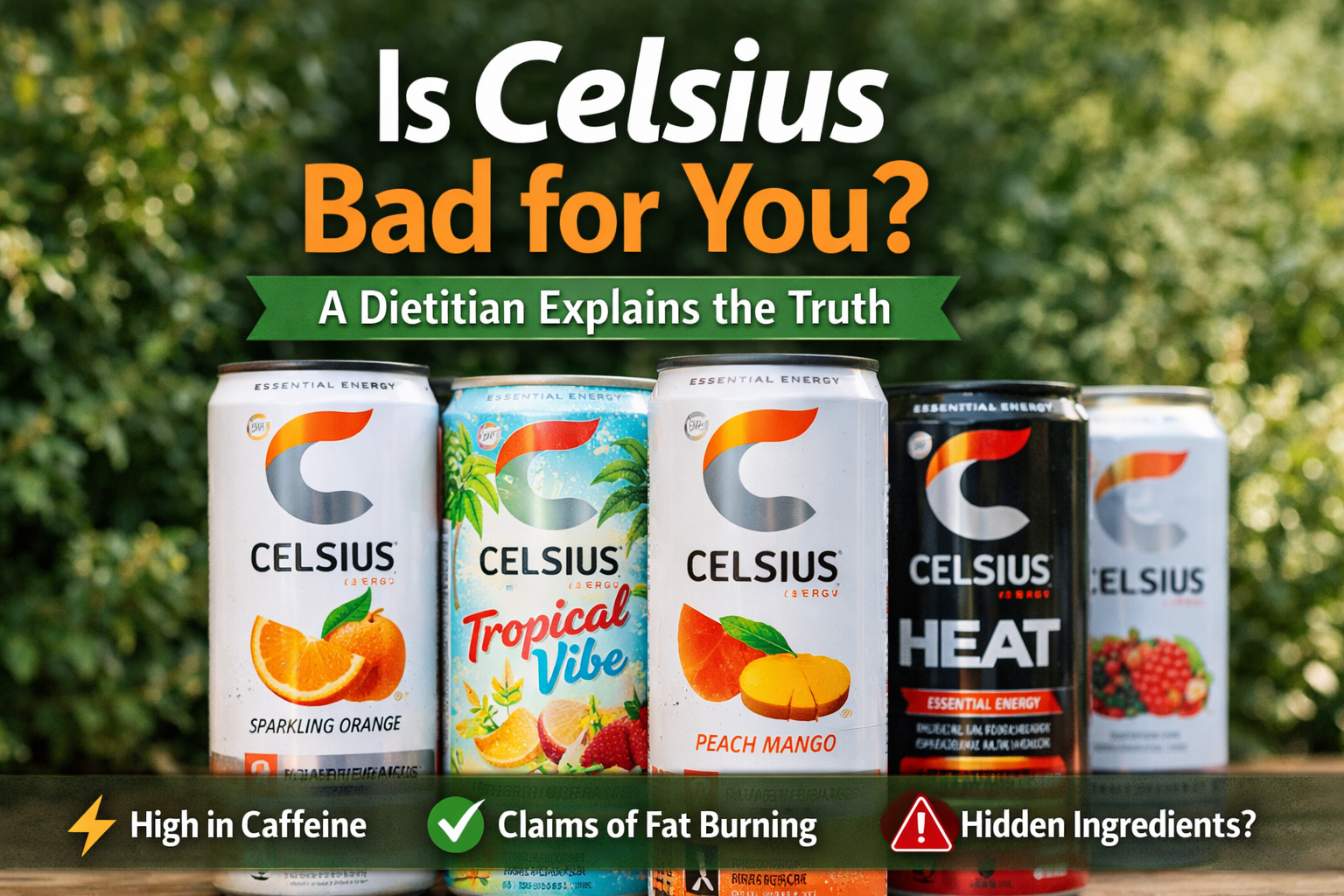
Is Celsius Bad for You? Energy drinks are everywhere, and Celsius has quickly become one of the most popular options. From gym enthusiasts to busy professionals, many people are asking the same question: Is Celsius actually healthy—or could it be harmful?
As a registered dietitian, I’ll break down what’s inside Celsius, whether it lives up to its health claims, and who should (or shouldn’t) drink it.
What Is Celsius Bad for You??
Celsius is marketed as a “healthy” energy drink that boosts metabolism, increases energy, and supports fat burning. Unlike many traditional energy drinks, Celsius emphasizes functional ingredients such as plant extracts and vitamins.
Some of the key ingredients include:
-
Green tea extract
-
Guarana seed extract
-
Caffeine
-
Taurine
-
Ginger extract
-
B vitamins
-
Branched-chain amino acids (BCAAs)
On paper, this sounds impressive—but the real question is whether these ingredients actually deliver meaningful health benefits.
Nutritional Facts: What’s Inside a Can?
Most Celsius drinks contain:
-
10 calories
-
0 grams of sugar
-
200–270 mg of caffeine per can
-
Added vitamin C and B vitamins
While the low calorie and sugar-free profile is appealing, the caffeine content is something to pay close attention to.
Breaking Down the Main Ingredients
Green Tea Extract
Green tea provides caffeine and antioxidants, which may support overall health. However, the amount in Celsius is unclear, so its real impact is difficult to measure.
Guarana Seed Extract
Guarana is a natural caffeine source and actually contains more caffeine than coffee beans. It contributes to the strong energy boost you feel after drinking Celsius.
Ginger Root Extract
Ginger may have anti-inflammatory and digestive benefits, but again, the dose in Celsius is unknown.
B Vitamins
B vitamins help your body convert food into energy, but they don’t provide energy directly. If you’re not deficient, extra B vitamins won’t give you a noticeable boost.
Taurine
Taurine is an amino acid involved in hydration and immune function. Your body already produces it, so supplementation is usually unnecessary for most people.
BCAAs
Celsius includes branched-chain amino acids like leucine and isoleucine, which are associated with muscle recovery. However, most people get enough BCAAs through food.
How Much Caffeine Is in Celsius?
Celsius contains 200 to 270 mg of caffeine per can, which is significantly more than:
-
A standard cup of coffee (~95 mg)
-
A can of Red Bull (~80 mg)
While some coffee drinks (like large café servings) can match or exceed this amount, Celsius packs a high dose into a single can.
If you’re sensitive to caffeine—or already drinking coffee, tea, or soda—this can lead to side effects such as:
-
Jitters
-
Headaches
-
Rapid heartbeat
-
Anxiety
-
Trouble sleeping
What Sweeteners Does Celsius Use?
Celsius contains no added sugar, but it typically uses sucralose as a sweetener. Some varieties use stevia instead.
Artificial sweeteners are generally considered safe, but some people prefer to avoid them due to digestive or personal health concerns.
Is Celsius Actually Good for You?
Celsius claims to:
-
Boost metabolism
-
Burn fat
-
Increase energy and performance
Let’s look at what science says.
Does Celsius Boost Metabolism?
There is some research suggesting Celsius may slightly increase metabolic rate, especially when combined with exercise. One small study found that people who exercised and consumed Celsius showed improved fitness compared to those who did not.
However, metabolism is influenced by many factors such as genetics, muscle mass, diet, and activity level. No energy drink is a magic solution for weight loss.
Does Celsius Improve Exercise Performance?
Caffeine can improve endurance, focus, and pain tolerance during workouts. So yes—Celsius may help performance, but this is not unique to Celsius. A cup of coffee could provide similar benefits at a lower cost and with fewer additives.
Also, most Celsius studies are small and company-funded, so more independent research is needed.
The Bigger Picture: One Drink Doesn’t Determine Your Health
Your overall health depends on daily habits:
-
What you eat
-
How much you move
-
How well you sleep
-
How you manage stress
No drink—energy drink or supplement—can replace healthy lifestyle choices.
Are Celsius Drinks Bad for You?
For most healthy adults, Celsius is likely safe in moderation. However, there are important warnings:
-
High caffeine content
-
Not recommended for children
-
Not recommended during pregnancy or breastfeeding
-
Not ideal for people with heart conditions or caffeine sensitivity
The can itself advises no more than two servings per day.
What Is a Proprietary Blend? (And Why It Matters)
Celsius uses proprietary blends, meaning the exact amount of each ingredient is not disclosed. While this protects the company’s formula, it also means:
-
We don’t know if ingredients are present in effective doses
-
We can’t fully assess safety or effectiveness
For example, ginger may be included—but is it enough to provide real anti-inflammatory benefits? There’s no way to know.
How Much Celsius Is Too Much?
Celsius recommends:
-
No more than two 12-oz cans per day
-
Avoid for kids, pregnant/nursing individuals, and caffeine-sensitive people
-
Be cautious if consuming other caffeine sources
The FDA suggests keeping caffeine intake below 400 mg per day for healthy adults, and two cans of Celsius can already put you close to that limit.
Final Verdict: Should You Drink Celsius?
Celsius isn’t inherently bad, but it’s not a health miracle either.
👍 Pros:
-
Low calorie and sugar-free
-
Contains antioxidants and vitamins
-
Can boost energy and workout performance
⚠️ Cons:
-
Very high caffeine
-
Uses artificial sweeteners
-
Proprietary blends hide ingredient doses
-
Not suitable for everyone
If you enjoy Celsius and feel fine drinking it occasionally, it’s probably okay. But if you’re using it daily to fight fatigue, it may be worth looking at sleep, nutrition, and lifestyle habits instead.