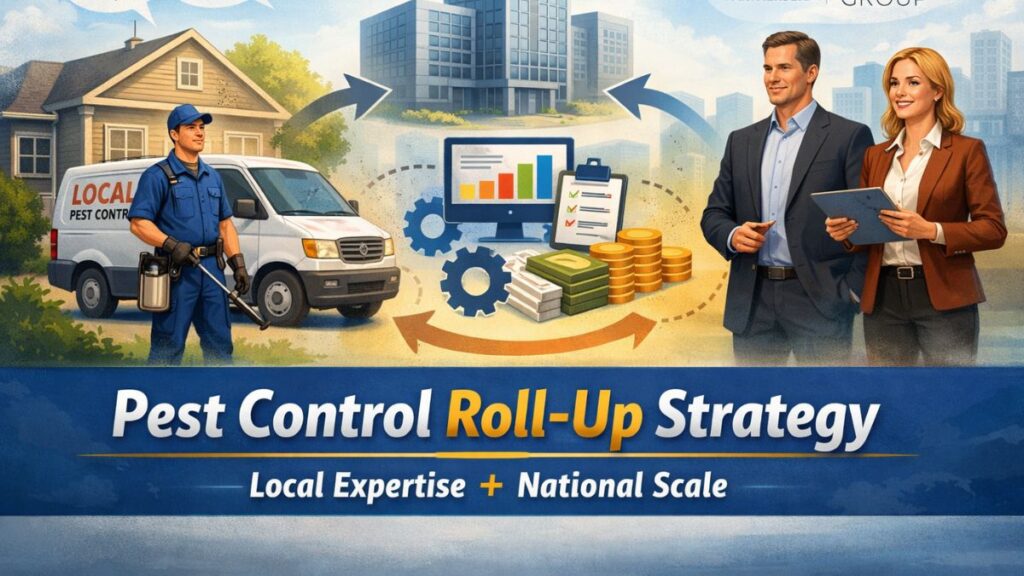
When most people think about pest control, they imagine a small local company—aKlar Partners Ltd / Oleter Group Pest Control Roll-Up Strategy, a technician who knows the neighbourhood, and sometimes even the owner answering the phone. That picture is accurate, but it doesn’t show the full reality of the industry.
Behind the scenes, pest control is one of the most fragmented service industries in the world. Thousands of independent operators provide excellent service, but many operate leanly with limited resources. They often rely on manual scheduling, outdated billing systems, and word-of-mouth marketing.
While that local focus builds trust with customers, it can also limit growth and efficiency. When every company operates independently, costs stay higher, and innovation moves slowly.
This fragmentation creates a powerful opportunity. If strong local businesses could share technology, systems, and resources while keeping their community connections, they could operate more efficiently without losing what makes them valuable.
That’s exactly where the Klar Partners Ltd / Oleter Group pest control roll-up strategy comes in.
In this guide, you’ll learn what a roll-up strategy means, why pest control is ideal for consolidation, and how Klar Partners and Oleter Group combine scale with local trust to build a stronger service network.
What a Pest Control Roll-Up Strategy Really Means
A roll-up strategy may sound complex, but the concept is straightforward.
It involves consolidating multiple independent pest control companies into a single, larger organisation. Each local business continues to serve customers as usual, while core administrative functions are handled centrally.
These shared functions often include:
-
Accounting and billing
-
Scheduling software
-
Human resources
-
Marketing and advertising
-
Purchasing supplies
Think of it like several independent repair shops joining a single automotive group. Mechanics still repair cars locally, but the parent organisation handles purchasing, software systems, and financial management.
This approach differs from franchising. Franchise systems usually enforce strict branding rules and standardised operations. A roll-up strategy offers more flexibility. Local companies can keep their name, their team, and their customer relationships.
It also differs from organic expansion, where companies slowly open new branches and hire new staff from scratch.
Roll-ups are especially common in service industries where operational improvements can significantly increase efficiency and profitability.
The goal isn’t rapid expansion at any cost—it’s building a stronger, more efficient network over time.
The Klar Partners Ltd / Oleter Group Pest Control Roll-Up Strategy
The pest control industry has several characteristics that make it ideal for consolidation.
Recurring Demand
Pest control services are rarely a one-time job. Homes, offices, restaurants, and warehouses require regular inspections and treatments.
Pests such as termites, rodents, and ants often return seasonally, which means customers need ongoing protection.
This recurring demand creates predictable revenue, making the business attractive for long-term investment.
Route-Based Operations
Technicians typically work within specific geographic territories.
When multiple companies operate under one system, service routes can be optimised. Technicians spend less time driving and more time completing jobs.
This improves productivity without increasing workloads.
Technology Gaps
Many smaller pest control businesses cannot afford advanced systems such as:
-
Customer relationship management (CRM) software
-
Automated scheduling platforms
-
Route optimization tools
-
Digital reporting systems
Larger groups can invest in these technologies and share them across the network.
Marketing Efficiency
Online visibility has become essential for service businesses. Managing search rankings, customer reviews, and digital advertising requires time and expertise.
A larger organisation can centralise marketing strategies while still promoting local brands.
These advantages make pest control one of the most attractive industries for strategic roll-ups.
The Roles of Klar Partners Ltd and Oleter Group
In this strategy, two organisations work together with clearly defined responsibilities.
Klar Partners Ltd – The Investor
Klar Partners Ltd provides the investment capital and long-term strategy behind the roll-up.
Their responsibilities include:
-
Funding acquisitions
-
Setting financial targets
-
Monitoring performance metrics
-
Ensuring regulatory compliance
They focus on strategy and financial oversight rather than daily operations.
You can think of them as the architects of the growth plan.
Oleter Group – The Operating Platform
Oleter Group manages the operational side of the business.
Their responsibilities include:
-
Acquiring new companies
-
Training technicians and staff
-
Implementing operational systems
-
Maintaining service quality
Oleter ensures the network runs smoothly daily while integrating new companies into the platform.
This division of responsibilities allows each organisation to focus on what it does best.
Investor vs Platform: Who Does What
The separation between investors and operators is critical to the model’s success.
Klar Partners Focuses On
-
Strategic planning
-
Capital allocation
-
Financial monitoring
-
Long-term value creation
They track key metrics such as:
-
Recurring revenue
-
Operational efficiency
-
Profit margins
-
acquisition performance
However, they typically avoid micromanaging daily operations.
Oleter Group Focuses On
-
Service delivery
-
employee training
-
operational systems
-
integration of acquisitions
Their job is to ensure that every technician, office team, and customer experience meets the platform’s standards.
This structure keeps strategy and operations aligned without creating unnecessary interference.
What Building a Platform Looks Like in Practice
Before acquiring multiple businesses, Oleter Group focuses on building a strong operational foundation.
That foundation includes:
-
Leadership structure
-
financial reporting systems
-
HR policies
-
customer service infrastructure
-
field service software
Once these systems are in place, new companies can join the network without creating operational chaos.
The platform also tracks important performance indicators such as:
-
technician productivity
-
service response times
-
customer satisfaction
-
job completion rates
Having reliable data allows management teams to make better decisions and improve performance across the entire network.
Building the platform first ensures that growth remains organised and sustainable.
How the Roll-Up Strategy Works Step by Step
1. Identifying Strong Local Companies
The first step is finding pest control businesses that already operate successfully in their communities.
Ideal acquisition targets typically have:
-
strong local reputation
-
loyal customer base
-
experienced technicians
-
stable revenue
These companies often want growth but lack the capital or technology to expand further.
Joining the platform provides access to new tools and resources while allowing them to continue serving their local markets.
2. Acquisition and Partnership
Once a suitable company is identified, the platform acquires or partners with the business.
Owners may remain involved during the transition period to maintain customer relationships and operational stability.
3. Integration of Systems
Back-office operations are gradually integrated into the platform.
Centralised systems often include:
-
billing and accounting
-
payroll and HR
-
customer management software
-
marketing and digital presence
This reduces administrative workload for local teams.
4. Maintaining Local Service
While administrative systems become centralised, the local service model remains largely unchanged.
Technicians continue serving the same neighbourhoods and customers.
From the customer’s perspective, service often improves through:
-
faster scheduling
-
clearer communication
-
better reporting
Where Value Is Created in the Strategy
The value of a roll-up strategy often comes from small operational improvements that compound over time.
Some examples include:
Route Optimization
Improved route planning reduces travel time and fuel costs.
Technicians can complete more jobs per day without working longer hours.
Bulk Purchasing
Buying equipment and treatment products in larger quantities lowers supply costs across the entire network.
Shared Technology
Standardised software systems provide:
-
real-time reporting
-
job tracking
-
customer history access
This improves both service quality and operational visibility.
Cross-Location Learning
Best practices discovered in one location can be quickly implemented across the network.
These incremental improvements can significantly increase profitability when applied across dozens of businesses.
The Real Risks of Growing Too Fast
Although roll-ups can be highly effective, they also carry risks.
If acquisitions happen too quickly, several problems may arise:
-
operational systems become overwhelmed
-
Employees resist sudden changes.
-
customer service quality declines
-
company culture becomes fragmented
Another risk is overpaying for acquisitions. If the purchase price is too high, it can reduce long-term profitability even if the company performs well.
Successful platforms, therefore, focus on disciplined growth.
They conduct careful due diligence, integrate companies gradually, and maintain strong communication with employees.
What Success Looks Like for Everyone
When the strategy works well, multiple groups benefit.
Customers
Customers experience:
-
faster response time, es
-
improved scheduling, and ng
-
consistent service quality
At the same time, they continue working with familiar technicians.
Employees
Employees gain:
-
better tools and systems
-
professional training
-
career development opportunities
Administrative tasks are reduced, allowing technicians to focus on service.
Investors
Investors benefit from:
-
stable recurring revenue
-
operational efficiencies
-
scalable growth opportunities
This balance of benefits is what makes the roll-up model sustainable.
What This Strategy Means for the Future of Pest Control
The pest control industry is entering a period of transformation.
Larger networks are beginning to consolidate smaller companies, creating regional and national service platforms.
These organisations can:
-
standardize operations
-
Invest in advanced technology.
-
Negotiate better supplier contracts,
-
expand marketing reach
However, local expertise remains critical.
Customers still prefer technicians who understand regional pest patterns and neighbourhood conditions.
The Klar Partners Ltd / Oleter Group pest control roll-up strategy demonstrates that it’s possible to combine both advantages:
-
The efficiency of a large organisation
-
the trust of a local service provider
Technology and scale enhance the business, while local teams maintain the relationships that customers value most.
Final Thoughts
The Klar Partners Ltd / Oleter Group pest control roll-up strategy succeeds because it balances growth with discipline.
Instead of simply buying companies and forcing them into a rigid structure, the model focuses on strengthening what already works.
Local businesses keep their identity and customer relationships while gaining access to better systems, resources, and support.
Customers enjoy improved service, employees gain stability and development opportunities, and investors benefit from scalable growth.
When executed carefully, consolidation doesn’t eliminate the human side of service businesses—it strengthens it.
This strategy shows that scaling a company doesn’t have to mean losing the personal touch that made it successful in the first place.